
DRAFT

This is Bob Frankston's web site. Bob Frankston

Bob Frankston (bio)

Welcome to my writings.

If you want the recent essays check out the sidebar on the left or, better, go to Further Readings for a curated list of essays.

Other essays are listed in chronological order and then by category. The main essays are in larger letters and minor documents (such as messages posted on discussion sites) are indented and in smaller letters. The documents themselves are located on this site (www.Frankston.com) and as well as external sites.

Note that I'm currently writing shorter transient posts on Facebook as "Bob Frankston". I'm gathering links here.

You can send me Email. Note this unique address is only valid for the next few days.

The best way to link to a document is as http://rmf.vc/keyword.

By default only the most recent posts are shown, to see:
Recent By Date Posts from the last few months
Columns Columns written in 1998-1999 -- blogging before blogs. Look here for my more recent columns.
All All posts -- hundreds

Writings and Updates by Date

Some of the recent entries are also listed on the sidebar. Secondary items such as postings on other mailing lists are indented. Note that the year shown is the year the essay was updated. An essay written in 1979 might be listed under 2009 if it was updated recently.
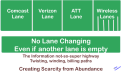
Information versus Telecom 📄 05‑May‑2011 26‑Dec‑2012
If you think that the Internet is important because it's a network you're missing the point. Today's telecommunications industry exists in defiance of all we've learned about "information" in the last 100 years. In 1897 the British Copyright office warned us about the danger of creating scarcity by taking our abundance and converting it to private property. In 1949 Claude Shannon gave us a science of "Information" that helped us understand the distinction between bits and what we do with them. The generativity of today's Internet demonstrates the power of the idea. We need to build on this understanding and experience to create an infrastructure that supports the exchange of bits. We can then focus on relationships and creating value rather than getting lost in the constricted pipes of today's Telecom.
Thinking outside the pipe 📄 17‑Oct‑2011 19‑Jul‑2012
The idea that bits must flow through wires or virtual pipes makes it hard to think of the Internet as infrastructure like roads. We communicate by exchanging bits. We need to move beyond the pipe or railroad metaphors if we are to take advantage of the abundant opportunities all around us.
The Information not-so-super Highway 📄 07‑Feb‑2011 19‑Apr‑2012
Re an Uproar on the Web Over $2 Fee by Verizon 30‑Dec‑2011 30‑Dec‑2011
It's easier to grasp small insults than asking why we have to pay to talk among ourselves
Verizon's customers are already captive which makes nuisance charges predatory.
Why Gigabit DSL matters 18‑Dec‑2011 18‑Dec‑2011
Gigabit DSL is one more reminder that it's about how we use our physical infrastructure and not copper vs. fiber vs. wireless.
The benefits of bad architecture 09‑Dec‑2011 09‑Dec‑2011
Good architecture decouple system elements in order to facilitate evolving the design. But the telephone system is designed badly and as a result it's difficult to dislodge the incumbents. Bad user experience is one result. Economic stagnation is another.
When a carrier puts monitoring software in a device they are assuming it is really their device and their software even if you have all "phone" conversations over IP. Another reminder that something is very wrong.
Verizon's attempt to charge users for less-crappy service reminds me of Bank of America's attempt to charge people for using credit cards in terms of being tone deaf. It's also a stupid idea but that's more subtle.
The "pipe" model of communications is akin to assuming the meaning is intrinsic and exists in each atom.
Dan and I talk about VisiCalc with the Google Docs team and others.
An in-depth discussion of the Internet as our new infrastructure. The lessons we learn from the Internet can also be applied to other markets and systems. The value of infrastructure such as the Internet comes from the opportunity it provides and what we do with that opportunity. It's a lesson for policymakers that extends beyond the particular technology.
Fighting for our liberties shouldn't be like playing Whack-a-Mole
Yet more reason to use normal social mechanisms rather than the DNS for social functions like reaching sites using human-oriented names and symbols that aren't easily subverted by simple typos.
Re: Losing on the Facts, AT&T Turns to Smears 26‑Aug‑2011 26‑Aug‑2011
ATT ads continue to claim credit for what others due, often despite ATT.
We need to remember that the cellular system is designed to fail if the billing system fails.
Profs Klein and Majewski's history of our path from private pikes to public roads from 1792 to the twentieth century.
Remembering Divestiture. 22‑Aug‑2011 22‑Aug‑2011
When you look back at the history of MCI we should also think about the technologies that enabled MCI and eventually doomed telecommunications as an industry.
When we remember the IBM PC we should also remember the openness of the Apple ][
Once again we see an emphasis on speed rather than availability.
ATT’s Plight is our Plight 📄 23‑Jun‑2011 22‑Jul‑2011
ATT’s planned acquisition of T-Mobile is an occasion to look at the fundamental issues facing the entire telecommunications industry. Very simply – we are asking providers to add capacity but we’re not willing to pay them a portion of the value created. Skype gets the benefits without paying the carriers. Worse, the more capacity there is the less valuable the carriers’ own services are.
We are losing our right to communicate. Why is there so little outrage?
Cellular over IP, Tethering and other technologies are vital elements of our right to communicate. Today the carriers are trying to impose restrictions just as they did in days they tried to ban webcams and home servers. They can't have it both ways -- they can't argue that they are trying to create abundance when doing everything within their power to assure scarcity. Even more so when it comes at the cost of our safety as well as our economy.
"iTunes" as part of the "as a service" trend which puts us at the mercy of third parties.
ICANN Financial incentives? 22‑Jun‑2011 22‑Jun‑2011
ICANN seems focused on creating source of revenue even if that means assuring the web will unravel. We need to assure that ICANN's incentives are consistent with the needs of society.
Does Dropbox need adult supervision?
Another reminder of the need for resilient engineering.
The DNS may be being mooted 17‑Jun‑2011 17‑Jun‑2011
New TLDs are being introduced just as browsers shift the emphasis from the DNS to searching. The new TLDs seem aimed more to extract money from users than to help them.
What does it mean to map "broadband"?
The Wrong Stuff 📄 13‑Jun‑2011 13‑Jun‑2011
When trying to think rationally we have to be aware that we don't have all the facts. Some seemingly foolish optimism is necessary to counter the possibilities we cannot anticipate.
An attempt to return the Internet to the status of just another telecommunications channel. Corruption or ignorance -- the harm is the same.
ATT Admits there is no bit exchange business 16‑May‑2011 16‑May‑2011
A senior ATT executive comments that there is no business in mobile data. And if all business is data the implications are stark. Fortunately infrastructure is a viable and stable alternative funding option.
The problem with Wi-Fi is not technical. It's the idea that we need to make billing and authentication level zero. That can't work -- instead we can simply fund a common infrastructure.
The very concept of telecommunications is based the idea that we are transporting valuable messages. We’ve applied that model to phone calls (“message unit” and now “minutes”). It’s about creating billable events.
The Internet Lost in Translation 📄 05‑May‑2011 06‑May‑2011
If all we need is a way to exchange some bits then we can adopt a simple model using any and all paths available without even a need to assure all bits get through. By funding it as a whole we don’t need to assure billing relationships between every device and every element of the path. It’s not just that you don’t know what to bill for. It’s hard to innovate when even a pacemaker must have a bookkeeper as the critical design element. While we do need to deal with some of the problems with today’s telecom our major focus should be on the future – creating generative opportunity rather than fighting over scarcity.
A more "Intelligent" and centralized 911 is easy abused.
The Epsilon break-in should be a warning about the risks of centralizing identity.
Once again we see people assuming that a VoIP provider must be cheating. Gaming the Regulatorium is the essence of telecom.
Another reminder that the funding model matters and that muni-bells aren't necessarily infrastructure providers.
Is ATT returning us to 1950?
Simple and Stark -- the telecom death spiral 21‑Mar‑2011 21‑Mar‑2011
ATT's acquisition of T-Mobile is a symptom of a far deeper problem with the concept of telecommunications.
It's time to revisit the First Amendment compromise that created the scarcity of spectrum.
Re: How the Assault on Netflix Will Shake Out 17‑Mar‑2011 17‑Mar‑2011
More and more companies, including old-line "cable" companies are streaming over IP and will be hurt by companies.
Is the ITIF only a shill for cable companies or can it take a positive stance in support of infrastructure?
We need to be careful about framing the issue of "municipal connectivity" as infrastructure rather than as a broadband service.
Usage caps are about bad accounting and not exhausting resources.
Caps are a way to prevent innovation as well as competition.
When "Building the Technology Stack for Internet Freedom" we need to make sure that the foundation supports freedom.
The iCology 📄 14‑Feb‑2011 14‑Feb‑2011
Apple has its own iCology in which you use Apple tools to develop products for Apple platforms for Apple users
First part of Leo Laporte interviewing me about connectivity technical and policy issues.
We need to remember that abstractions are real and real objects can be abstracted. That's how markets work.
Nokia needs to adjust to a new landscape and figure out what business it is in.
Demystifying Networking 📄 29‑Nov‑2010 09‑Feb‑2011
Exchanging bits is a simple idea but one that is shrouded in misunderstandings that keep us dependent upon service providers. If see past the mystery and understand networking we can fund infrastructure as a public good. It would give us the kind generative opportunity that a service provider can't give. In fact the service providers very existence depends upon keeping their users dependent and limited.
It is naive to assume that names are globally unique.
Verizon's decision to second-guess content shows it doesn't yet grasp the idea of the Internet and users defining the meaning of the bits
Apple's policy limit how much each of us an innovate.
Apple's attempt to take a cut of the money made using the iPhone is worrisome. ATT had a similar attitude.
Re: ICANN, Bill Clinton, and Mr. Magoo 31‑Jan‑2011 31‑Jan‑2011
ICANN has value as a travel agency.
It's easy to shutdown today's Internet because the protocols are aligned with authority.
Another reminder why we need an infrastructure business model rather than billable pipes.
Re: More on UMA - Unlicensed Mobile Access 23‑Jan‑2011 23‑Jan‑2011
We need to be careful about perpetuating myths like the idea that we can only communciate because we bake-in particular services.
More on UMA - Unlicensed Mobile Access 23‑Jan‑2011 23‑Jan‑2011
UMA Liberates us from the physical cellular infrastructure. Next step is liberating us from the business model.
Wi-Fi Calling! 22‑Jan‑2011 22‑Jan‑2011
Why isn't "cellular over Wi-Fi' the norm. Why do we need a special cellular network?
The idea of using the First Amendment to hide information is strange but it's a reminder to think about why we have cellular pricing cliffs.
Verizon’s Internet Gateway 📄 18‑Jan‑2011 21‑Jan‑2011
Verizon's limitations on what I can do with in my own home seem to violate the spirit if not the specific rules of neutrality.
On limitations of number porting policy.
The Residential Gateway is back 18‑Jan‑2011 18‑Jan‑2011
Rolling back the clock to the 1990's?
The should focus on eliminating choke points rather than negotiating passage.
CES 2011: An Interpretation 📄 17‑Jan‑2011 17‑Jan‑2011
On the surface the Consumer Electronics Show is about artifacts of technology. If we look under the surface it's a far more interesting show.
Sharing connectivity is a feature that enriches society. It's not like stealing a consumable but more like joining the commons.
Trusting "identity" is a very seductive idea fraught with consequences.
The 2011 and 1950 homes of the future aren't very different
What is 4G and who has it? 11‑Jan‑2011 11‑Jan‑2011
There may be one Internet but why is it always on the far side of a tollbooth?

Columns

The columns were my first attempt at writing short opinion pieces. They were written in 1998 and 1999. The proofreading was far limited at best.

Bob Frankston
Copyright 1997-2024